

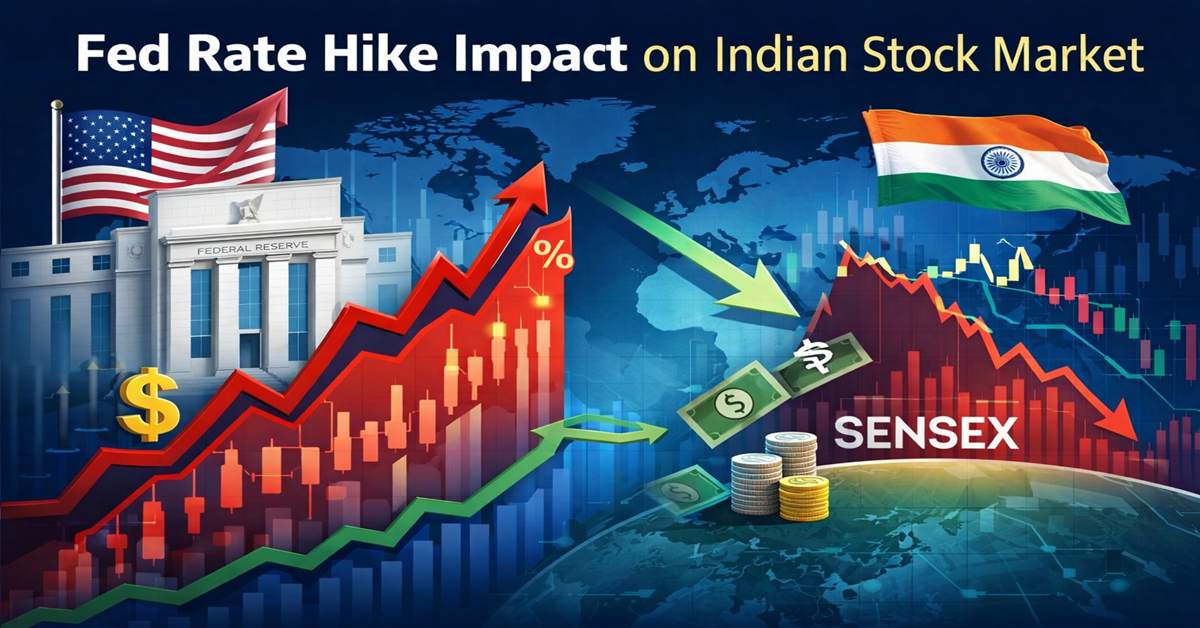
The Indian stock market is influenced not only by domestic factors but also by global economic developments. One of the most important global events that impacts markets worldwide is a rate hike by the US Federal Reserve. When the Fed increases interest rates, it changes the flow of global capital, affects currency movements, and influences investor sentiment. As a result, the stock market often reacts quickly to such decisions. Understanding this connection can help investors better interpret market movements and make informed decisions.
What is a Fed Rate Hike
The US Federal Reserve, often referred to as the Fed, controls interest rates in the United States. A rate hike means the Fed increases the cost of borrowing.
Why Does the Fed Raise Rates?
- To control inflation
- To stabilize the economy
- To manage excessive liquidity
Higher interest rates make borrowing more expensive, which can slow down spending and economic activity.
Impact on Global Financial Markets
When the Fed raises interest rates, it has a ripple effect across global markets.
Stronger US Dollar
Higher interest rates attract foreign investors to the US, strengthening the dollar.
Shift in Investment Flows
Investors may move funds from emerging markets like India to the US for safer returns.
These changes directly affect the Indian stock market.
Impact on Indian Stock Market
The Indian stock market reacts to Fed rate hikes through multiple channels.
Foreign Investor Outflows
Foreign Institutional Investors (FIIs) often withdraw money from emerging markets when US rates rise. This can lead to selling pressure in Indian equities.
Market Volatility
Fed decisions create uncertainty, which can increase volatility in the market.
Sector Impact
- IT sector may benefit due to strong dollar
- Banking and rate-sensitive sectors may face pressure
Effect on Rupee and Inflation
The Indian stock market is also influenced by currency movements.
Rupee Weakness
A stronger US dollar can weaken the Indian rupee, making imports more expensive.
Rising Inflation Pressure
Higher import costs can lead to inflation, which may impact economic growth and market sentiment.
RBI’s Response to Fed Rate Hike
The Reserve Bank of India (RBI) often adjusts its policies in response to global changes.
Interest Rate Decisions
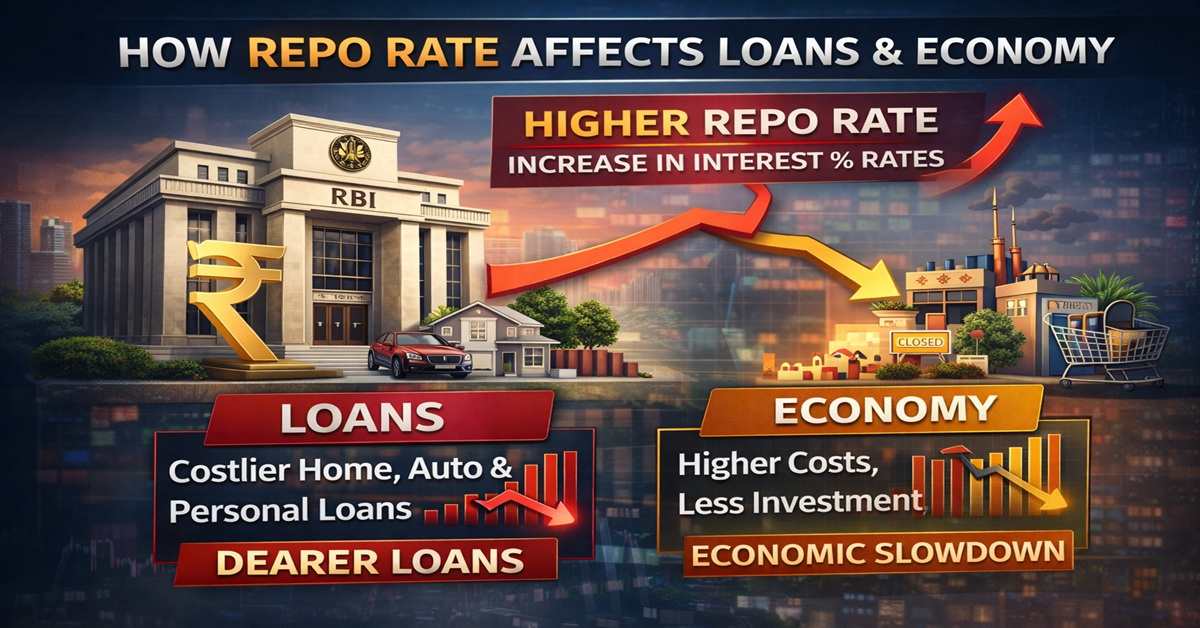
RBI may increase interest rates to control inflation and stabilize the currency.
Liquidity Management
Changes in liquidity can influence borrowing costs and market activity.
These steps can further impact the Indian stock market.
Long-Term vs Short-Term Impact
Short-Term Impact
- Increased volatility
- FII selling pressure
- Market corrections
Long-Term Impact
- Strong fundamentals support recovery
- Domestic investors provide stability
- Growth sectors continue to perform
While rate hikes may cause short-term uncertainty, the long-term outlook depends on economic strength.
What Investors Should Watch
Investors tracking the Indian stock market should focus on:
- Fed policy announcements
- FII and DII activity
- Currency movements
- RBI decisions
Understanding these factors helps in navigating market fluctuations
A Fed rate hike has a significant impact on the Indian stock market, influencing capital flows, currency movements, and investor sentiment. While it may lead to short-term volatility, strong economic fundamentals can support long-term growth.
How does a Fed rate hike affect the Indian stock market?
A Fed rate hike affects the Indian stock market by influencing foreign investment flows. When US interest rates rise, foreign investors may shift funds to the US, creating selling pressure in the Indian stock market.
Why do FIIs sell when the Fed increases interest rates?
FIIs often sell in the Indian stock market when the Fed increases interest rates because higher returns in the US attract global capital, leading to outflows from emerging markets like India.
Does a Fed rate hike always lead to a fall in the Indian stock market?
A Fed rate hike does not always lead to a fall in the Indian stock market. While it may cause short-term volatility, strong economic fundamentals can support long-term growth.
How does a Fed rate hike impact the Indian rupee and stock market?
A Fed rate hike strengthens the US dollar, which can weaken the rupee. This can impact the Indian stock market by increasing import costs and affecting investor sentiment.
Is a Fed rate hike good or bad for the Indian stock market?
A Fed rate hike can have mixed effects on the Indian stock market. It may create short-term pressure but can also reflect strong global economic conditions

Leave a Reply