

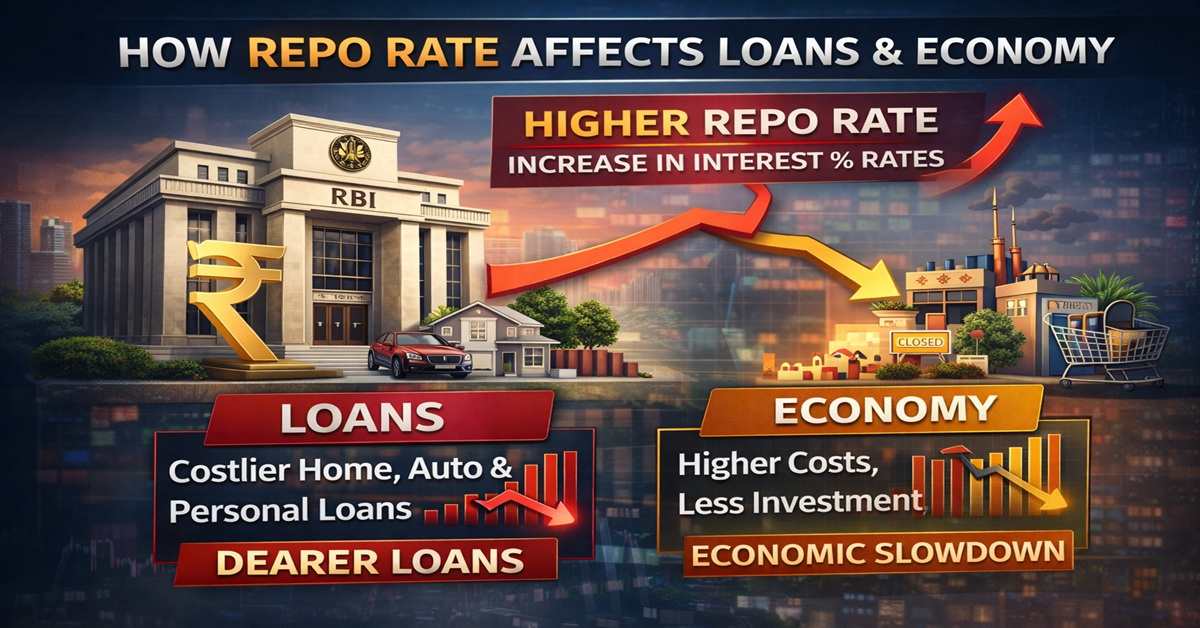
The Sensex, one of the key indicators of the Indian stock market, is influenced by several economic factors. Among them, the RBI repo rate plays a crucial role in shaping market trends. Many investors often ask why RBI increases repo rate and how it affects stock prices. The repo rate is the rate at which the Reserve Bank of India (RBI) lends money to commercial banks. When the RBI changes this rate, it impacts borrowing costs, liquidity, and overall market sentiment. As a result, movements in the repo rate can directly influence the Sensex.
What is RBI Repo Rate?
The repo rate is an important tool used by the RBI to control inflation and manage economic growth.
Why RBI Increases Repo Rate
Understanding repo rate is important for investors. The RBI usually raises the repo rate to:
- Control rising inflation
- Reduce excess liquidity in the economy
- Maintain economic stability
When inflation rises, increasing the repo rate makes borrowing more expensive, which helps reduce spending.
How Repo Rate Impacts Sensex
Changes in the repo rate have a direct impact on the stock market, including the Sensex.
Increase in Repo Rate
When the RBI increases the repo rate:
- Borrowing becomes expensive
- Consumer spending may slow down
- Corporate profits can be affected
This can lead to a negative sentiment in the stock market, causing the Sensex to decline or become volatile.
Decrease in Repo Rate
When the repo rate is reduced:
- Loans become cheaper
- Spending and investment increase
- Market sentiment improves
This often supports a rise in the Sensex.
Impact on Different Sectors
Repo rate changes affect different sectors in different ways.
Banking Sector
Banks may see changes in lending rates, which can affect profitability. Higher repo rates may reduce loan demand.
Real Estate Sector
Higher interest rates make home loans expensive, which can reduce demand in the real estate sector.
Automobile Sector
Expensive loans can reduce consumer demand for vehicles, affecting sales.
IT and Export Sector
These sectors may be less impacted directly, but global factors can still influence performance.
Investor Sentiment and Market Reaction
One of the main reasons increases repo rate is to control inflation, but this can also impact investor sentiment.
Short-Term Impact
- Market volatility increases
- Investors become cautious
- Sensex may fall or remain unstable
Long-Term Impact
- Inflation control supports economic stability
- Markets may recover over time
- Strong fundamentals drive long-term growth
Role of Inflation in Repo Rate Decisions
Inflation is one of the biggest reasons why repo rate increases.
When inflation rises:
- Prices of goods and services increase
- Purchasing power decreases
- RBI raises repo rate to control demand
This helps stabilize the economy but may create short-term pressure on the stock market.
What Investors Should Wat
Investors should closely monitor repo rate decisions and their impact on the market.
Key Indicators
- RBI policy announcements
- Inflation data
- Interest rate trends
- Sector performance
Understanding these factors helps investors make better decisions in the market.
The repo rate is a powerful tool used by the RBI to manage inflation and economic growth. Understanding why RBI increases repo rate helps investors interpret market movements more effectively.
While an increase in repo rate may create short-term pressure on the Sensex, it also ensures long-term economic stability. By staying informed, investors can better navigate market changes and make informed financial decisions.
Why RBI increases repo rate?
The RBI increases the repo rate mainly to control inflation. When inflation rises, the RBI makes borrowing more expensive to reduce spending in the economy. This helps stabilize prices and maintain economic balance.
How does repo rate affect Sensex?
The repo rate affects the Sensex by influencing borrowing costs and liquidity. When the RBI increases the repo rate, it can slow down economic activity, which may lead to negative sentiment in the stock market.
Is a repo rate hike good or bad for investors?
A repo rate hike can create short-term pressure on the stock market, but it helps control inflation in the long run. Understanding why RBI increases repo rate helps investors make better decisions during market volatility.
Which sectors are affected by repo rate changes?
Sectors like banking, real estate, and automobiles are directly affected by repo rate changes. Higher interest rates can reduce demand, which impacts these sectors and overall market performance.

Leave a Reply