

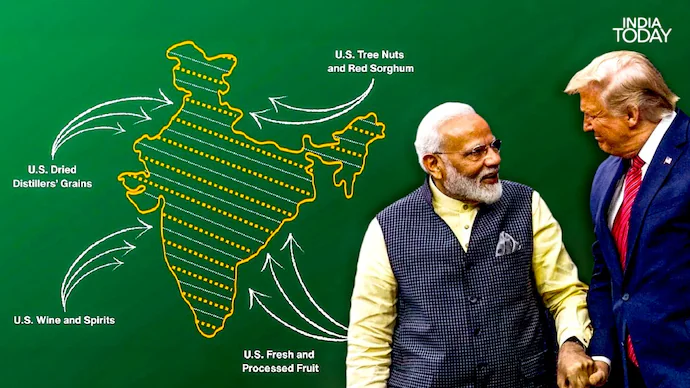
The India US trade deal has once again come into focus as both countries look to strengthen economic ties amid shifting global supply chains and geopolitical uncertainty. As two of the world’s largest democracies and major economies, India and the United States see trade cooperation as a key driver of long-term growth, investment, and strategic partnership.
Why the India US Trade Deal Matters
India and the US are natural economic partners. The US is one of India’s largest trading partners, while India is a fast-growing market for American businesses. A structured trade deal helps reduce barriers, improve market access, and create predictability for companies on both sides.
For India, deeper trade engagement supports exports, job creation, and technology inflow. For the US, it opens access to a large consumer base and a reliable partner in Asia.
Key Areas of the Trade Agreement
Market Access and Tariffs
One of the central discussions in the India US trade deal revolves around tariff reductions and fair market access. Both sides aim to address long-standing concerns related to customs duties, regulatory standards, and product approvals.
Simplifying trade rules can lower costs for businesses and make cross-border trade smoother.
Technology and Digital Trade
Technology cooperation is a growing pillar of India US relations. The trade framework supports collaboration in areas such as semiconductors, digital services, artificial intelligence, and cybersecurity.
For India, this means access to advanced technology and investment. For the US, it strengthens supply chain resilience and innovation partnerships.
Manufacturing and Supply Chains
As global companies diversify supply chains, India is emerging as a key manufacturing hub. The trade deal supports initiatives that encourage manufacturing investment, skill development, and infrastructure growth.
This aligns with India’s broader push to become a global manufacturing and export destination.
Impact on Indian Economy and Businesses
The India US trade deal can positively impact several sectors, including pharmaceuticals, IT services, textiles, engineering goods, and renewable energy. Improved trade terms help Indian exporters compete more effectively in the US market.
Small and medium enterprises also benefit from better access, clearer regulations, and potential partnerships with US firms.
Strategic and Global Significance
Beyond trade, the agreement strengthens strategic ties between India and the US. Economic cooperation complements collaboration in defence, energy security, and regional stability.
In a world facing supply chain disruptions and trade uncertainty, a stable India–US partnership sends a strong signal to global markets.
What Lies Ahead
While negotiations take time, the direction of the India–US trade deal remains constructive. Continued dialogue, mutual trust, and policy alignment will be crucial to translating intent into outcomes.
If implemented effectively, the trade deal can support sustainable growth, innovation, and economic resilience for both countries.
The India US trade deal is more than a trade agreement it is a roadmap for deeper economic integration. As global dynamics evolve, stronger trade ties between India and the US can play a defining role in shaping the future of international commerce.


Leave a Reply